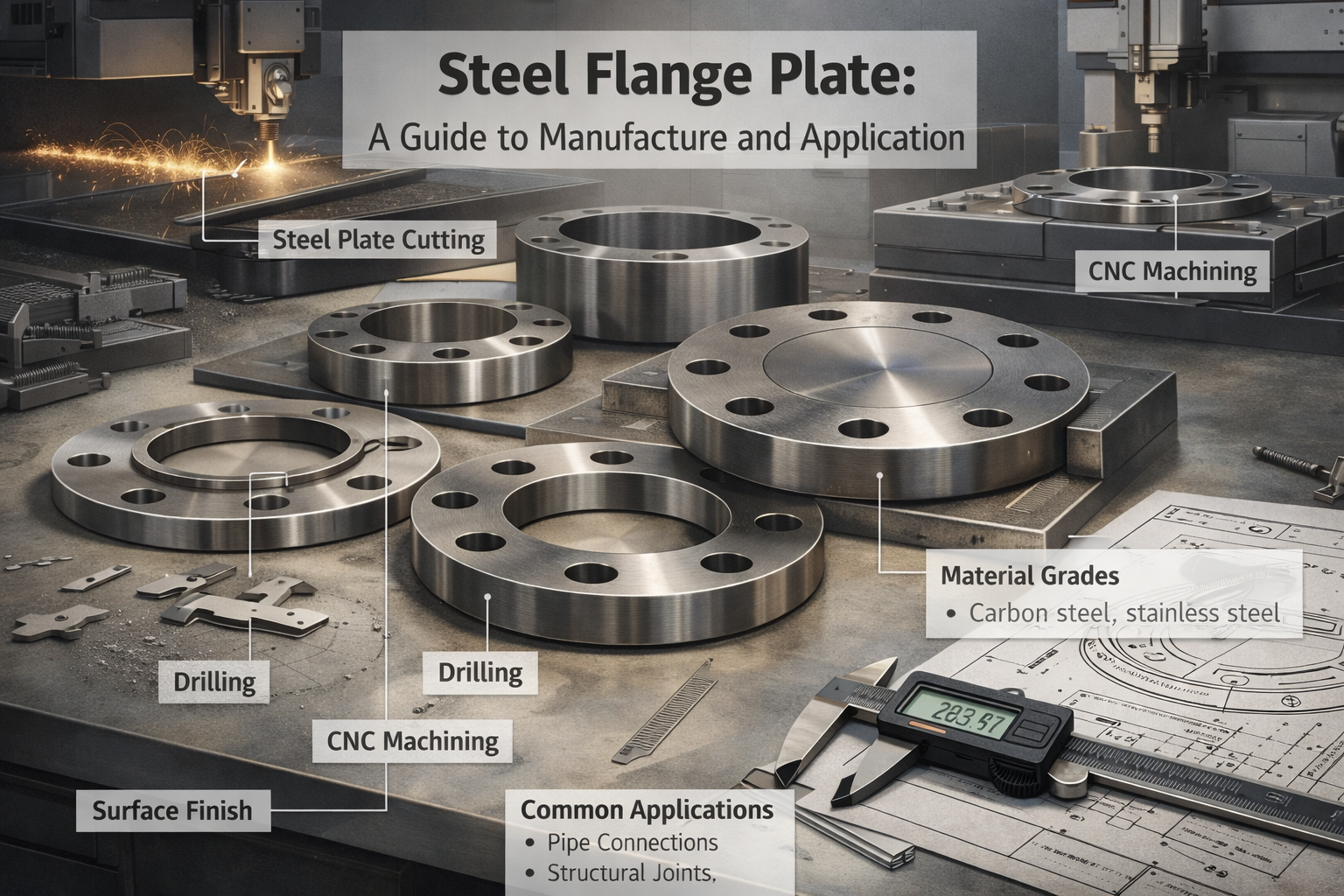
The term “steel flange plate” can mean two related things. First, it refers to the raw steel plate material that manufacturers use to cut and machine flanges. Second, it describes a specific product: a “plate flange,” which is a flat, relatively thin flange made directly from a steel plate. This guide explains both.
From Raw Plate to Finished Flange: The Manufacturing Process
Many flanges start as a piece of steel plate. The manufacturing process determines the final flange’s strength, cost, and suitable applications. The two main methods are plate cutting and forging.
Here is a comparison of the two main manufacturing routes:
| Process | How It Works | Best For | Key Characteristics |
| Plate Cutting | A shape is cut from a flat steel plate using a torch, plasma, waterjet, or laser. The blank is then machined. | Lower-pressure applications, large diameters, custom or one-off designs, cost-sensitive projects. | More economical material use. The grain structure of the plate remains unchanged. Generally for lower pressure ratings. |
| Forging | A heated steel billet is shaped under extreme pressure (hammering or pressing). This refines the steel’s grain structure. The forged shape is then machined. | High-pressure, high-temperature, or critical service applications where strength and integrity are paramount. | Creates superior strength and impact resistance. Aligns the grain flow to the flange shape. The preferred method for standard, high-performance flanges. |
Plate Flanges as a Finished Product
A plate flange (sometimes called a “flat flange” or “plain flange”) is a specific type of flange. It is made from plate steel and has a flat, even design with no raised hub. They are commonly made to ASME B16.5 and AWWA C207 standards.
Key Features of Plate Flanges:
- Design: They are relatively thin compared to a weld neck flange of the same size.
- Connection: They are connected by fillet welding both the inside and outside of the flange to the pipe. This is similar to a slip-on flange but without a pre-machined hub.
- Common Standards: AWWA C207 is the primary standard for steel plate flanges used in waterworks systems (like pipelines and treatment plants). It defines Classes B, D, E, and F for different pressure ratings.
Common Materials and Grades
The steel plate used must meet specific standards for strength and weldability. Common material specifications include:
- Carbon Steel: ASTM A36 (general structural) and ASTM A516 (pressure vessel quality) are very common. They offer good strength and are cost-effective for many applications.
- Stainless Steel: Grades like 304/304L and 316/316L are used for corrosion resistance in chemical, food processing, or marine environments.
- Alloy Steel: Plates like ASTM A387 are used for high-temperature service, such as in power generation.
Applications: Where Steel Plate Flanges Are Used
Steel plate flanges serve important roles across several industries due to their practicality and strength.
Key Application Details:
- Water & Wastewater: This is the most common use. AWWA C207 plate flanges connect large-diameter pipes for municipal water, sewage, and treatment plants.
- Industrial Piping: They are used in plant air, cooling water, and other utility lines where high pressure is not a factor.
- Structural Uses: Thick steel plate is often used to create large blind flanges for vessel ends, anchor flanges to secure pipelines, or custom pad flanges (also called studding outlets).
- Tanks & Vessels: Plate flanges form the connections on tanks, pressure vessels, and heat exchangers.
Frequently Asked Questions
Q: Is a plate flange the same as a slip-on flange?
A. They are very similar and often used interchangeably. The main difference is that a standard slip-on flange has a short, pre-machined hub. A plate flange is cut flat from the plate. Both use a similar double-fillet weld.
Q: Can plate flanges be used for high-pressure service?
A. Typically, no. The flat plate design and fillet weld connection are not as strong as the forged and butt-welded design of a weld neck flange. They are best for low to medium pressure.
Q: How are the bolt holes added?
A. After cutting the circular blank from the plate, the bolt holes are precision-drilled using a CNC machine or a drill template. This ensures the bolt circle diameter is accurate for mating with other flanges.
Q: What does “Class” mean for an AWWA C207 flange?
A. AWWA C207 defines pressure classes by letter. Common ones are Class B (75 psi), Class D (150 psi), Class E (200 psi), and Class F (300 psi). The class determines the flange’s thickness and bolt pattern.
Q: What’s the main advantage of a forged flange over one made from plate?
A. Forging creates a continuous, aligned grain structure, making the metal tougher and more resistant to impact and fatigue. For critical, high-stress services, forging is the standard.
Conclusion
Steel flange plate is the versatile starting point for many essential piping components. Whether as raw material for manufacturing or as finished plate flanges, they provide cost-effective and reliable solutions for countless industrial, municipal, and structural applications. Choosing between a plate flange and a forged flange comes down to your system’s pressure, temperature, and performance requirements.
Need plate flanges cut to AWWA C207 or other specifications, or require custom fabrications from steel plate? We supply and manufacture flanges from a wide range of plate materials for your project’s needs.
Submit your specifications for plate flanges or custom plate fabrications: http://texasflange.com/lp12/